
Wingman Life Principles
- The greatest distinction of all comes when we sacrifice ourselves for others
- However connoisseurs may choose to rate grapes and wines, human beings should never be rated or separated based on regional pedigree, variety, or any other characteristic
Leadership Lessons Learned
- Sometimes the most important kind of leadership comes with simply joining others in doing the right thing, whether it’s in a B-24, in a vineyard, or anywhere else
- Leaders show up in the biggest ways when they safeguard and enrich the small slices of life we all share
Out Standing in a Field
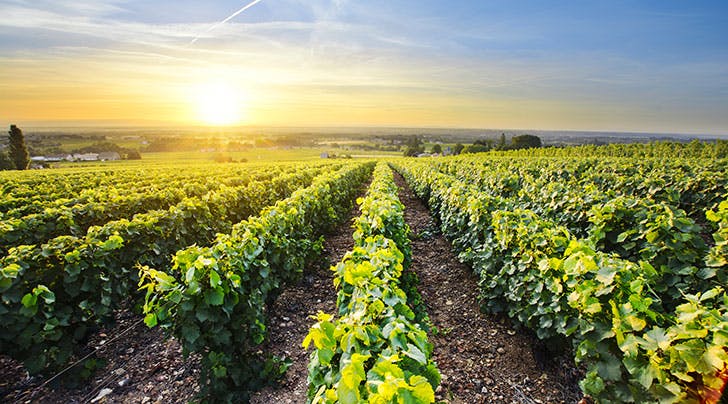
There I was a while back, soon after the turn of the century, standing in a French vineyard for a good part of the late morning one Monday.
Some of my fellow Americans back home at the time might have told me to shake even the idea of that vineyard’s soil off the soles of my flight boots, because of France’s opposition to America’s intentions to attack Iraq, which became Operation Iraqi Freedom, starting in March 2003. But I couldn’t agree.
Humor me while I tell you a story from the time I spent in the south of France not long after 9/11, a story that involves 10 long-dead Americans, their B-24, and a French vineyard filled with people glad to stand in the hot sun together for an hour.
Small Towns and Wine in Provence, France
The vineyard where I had found myself is one of many like it near Courthezon, a sleepy little town in France’s exquisitely beautiful Rhone River valley. Not much more than a stone’s throw away from Courthezon is Châteauneuf-du-Pape, a town which produces some of the world’s most prestigious and best-known wines.
Courthezon is not renowned like Châteauneuf-du-Pape, but it, too, has vineyards; and I was sure that the wine produced from the grapes that surrounded me that day was excellent, both in bouquet and flavor, even if it hadn’t attained the AOC status of Châteauneuf’s rare reds and even rarer whites.
The Appellation d’Origine Contrôlée (AOC) – or Controlled Designation of Origin – system is how the French identify the geographical origins, and the associated quality, of their wines. Unlike their American counterparts, French vintners believe it’s not so much the variety of the grapes used in winemaking that determines a wine’s quality, as it is precisely where those grapes grew.
AOCs are superior viticultural regions recognized by the French Institut National des Appellations d’Origine – or National Institute of Appellations of Origin. The regions in question may consist of only a few plots of land or instead cover hundreds of square miles; but, in either case, the Institute has determined that, due to its unique soil, topography, and climate – or terroir – a region awarded an AOC designation will produce wines with shared idiosyncratic characteristics, as well as a shared high standard of quality due to the superior winemaking practices employed in the area.
AOC designations are marks of great distinction.
Châteauneuf-du-Pape is AOC-listed, while Courthezon isn’t; but that doesn’t stop the people of Courthezon from producing their own wines.
But I wasn’t in that vineyard that day to honor the grapes or the wines, no matter how good they may have been.
I was there to honor 10 American men who died there on May 27, 1944, 58 long years before.
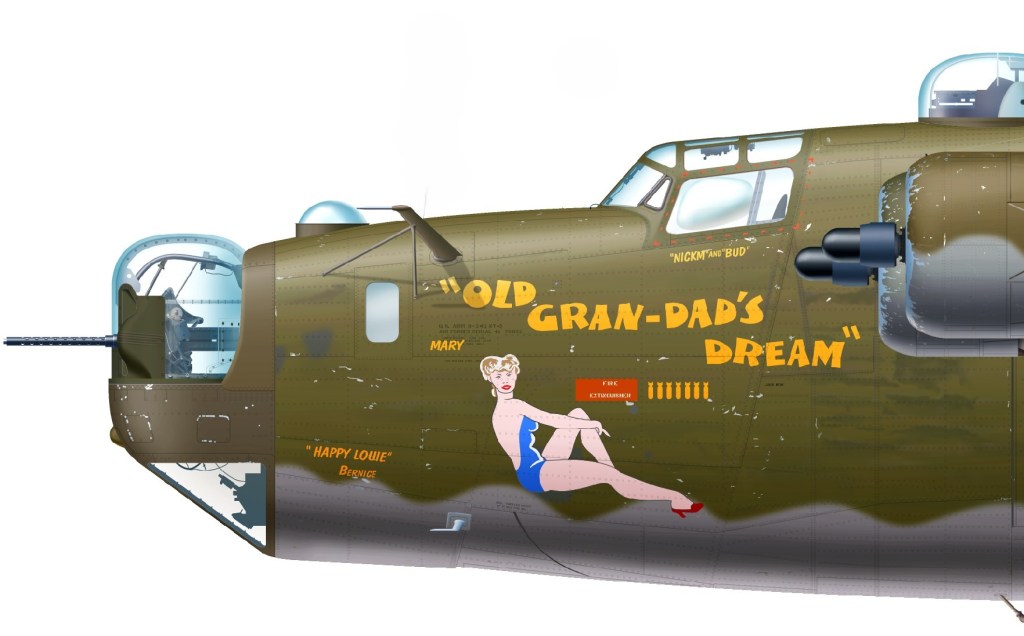
The Liberator Crew of “Old Gran-Dad’s Dream”
The 10 men we were honoring that day were the crew of one of 18,188 Consolidated B-24s built for the U.S. Army Air Corps during World War II. In honor of its intended role in liberating occupied territories during that war, the aircraft was designated the “Liberator” by the British Royal Air Force, the first to bring it into active service
The crew we were honoring had nicknamed their Liberator, “Old Gran-Dad’s Dream,” an additional mark of great distinction in its own right, I’m sure; and the crew’s assigned target that day in May 1944 was the railroad yard in Nîmes, 40 miles southwest of Courthezon.
The crew’s mission was part of the Allied effort to soften up the German forces who had occupied France. They were flying that day to help prepare the battlespace for Operation Overlord, known to most of us today as the D-Day invasion. But the eventual success of Overlord notwithstanding, the crew of Old Gran-Dad’s Dream never reached their target, they never returned to their base in Italy, and they never returned to their homes and families in the United States.
Those Americans never returned home, because they crashed in the field where I was standing; and everyone among them perished in the wreckage, if they weren’t already dead long before their violent impact with the ground.
Honoring Their Service and Sacrifice
I was standing at attention in my American Air Force flight suit in that vineyard that morning in May 2002 in honor of the service and sacrifice of the crew of Old Gran-Dad’s Dream. But I wasn’t alone.
When I was invited to the ceremony, I expected something rather small and unexceptional. It was a ceremony in a vineyard beside a small, relatively undistinguished town, after all, a ceremony to honor 10 men who had died more than half a century earlier. But our small contingent of 25 or so American servicemembers, who came from our detachment at a nearby French Air Force base, was joined not only by four French men who had actually seen Old Gran-Dad’s Dream crash, but also by more than 150 other French men, women, and children, children who were born many years after the sacrifice we were honoring.
Those scores of people believed that what had happened in that field in 1944 was extremely important, and that it remained important enough in 2002 for all of us to get our shoes dirty, while we stood together in the hot sun for an hour, despite our countries’ differences over the Iraq War at the time. But the ceremony in 2002 was nothing special.
Whether Americans are available to join them or not, the members of the Courthezon community stand in that field on that anniversary every single year.
What is a single hour in the sun, after all, compared to the hours lost in the truncated lives of the young American men who sacrificed themselves in the cause for freedom in Europe during World War II, 3,000 miles or more from their own homes in the United States?
Undistinguished and Unassuming
The men we were honoring very likely came from towns equally as undistinguished as Courthezon, towns which probably had no vineyards at all. But those undistinguished American towns had every bit as much status for those unassuming men as Châteauneuf-du-Pape does with the Institut National des Appellations d’Origine; and the crew of Old Gran-Dad’s Dream gave away everything important to them, including their very lives, to buy freedom back for people they didn’t even know, the people of Courthezon and of Châteauneuf-du-Pape, and of all the regions – French and otherwise, AOC-listed or not – which had been overrun by that era’s forces of tyranny.
The 10 men crewing Old Gran-Dad’s Dream died proclaiming the truth that, however connoisseurs may choose to rate grapes and wines, human beings should never be rated or separated based on regional pedigree, variety, or any other characteristic, for that matter.
Standing in Reluctantly
I was uncomfortable after the speeches ended, when our hosts asked all the American military servicemembers present to pose as a group, behind the monument that had been erected in the vineyard many years before, in honor of the men who died in that field in 1944.
That monument is a large piece of granite, with the names of the crew inscribed on marble that is mounted on a piece of the armor from the wrecked B-24 itself, armor which now helps to memorialize the men, even though it failed to protect them from their enemies.
As the lives of all of us in attendance that day intersected during those brief moments in 2002, our new friends wanted photographic evidence of our visit, despite our countries’ differences of opinion over what had become America’s Global War on Terror.
I felt as if we living Americans in attendance that day were somehow standing in for the Liberator crewmen who couldn’t be there themselves.
It made me uncomfortable – until I realized that safeguarding small slices of life just like the one I was sharing with our French hosts, in that vineyard beside Courthezon, is exactly why those 10 long-lost men were willing to die.
As the shutter of the camera clicked (taking a photograph I wish I had), I imagined that we would toast the service and the sacrifice of those men at lunch, with a fine red wine painstakingly produced using the fruit of the vines that surrounded us – after a toast with water to the souls of the departed who couldn’t drink with us that day.
And we did.
Toasts to Service and Sacrifice Continue
Despite all the years that have passed since 1944 and 2002, toasts to service and sacrifice – and to more departed souls – continue to be apropos, as the struggle against tyranny around the world persists, even though that struggle is always difficult and it sometimes comes with disillusioning outcomes.
I know that the overwhelming majority of us around the world hate bloodshed and dream of the day when war will cease altogether and forever – including those of us currently wearing military uniforms and those with military uniforms hanging unworn in our closets. But I’m also confident that all my fellow Americans, the French friends I made in that vineyard in May 2002, and allies the world over will continue to raise their glasses with me – on our American Memorial Day and on other anniversaries like it throughout the year – to toast the freedom fighters still in the fray, but especially to toast all those freedom fighters we’ve lost along the way.
All give some.
Some give all.
All the rest benefit.


Please leave a comment!