
Gunfighting and Leadership Coaching
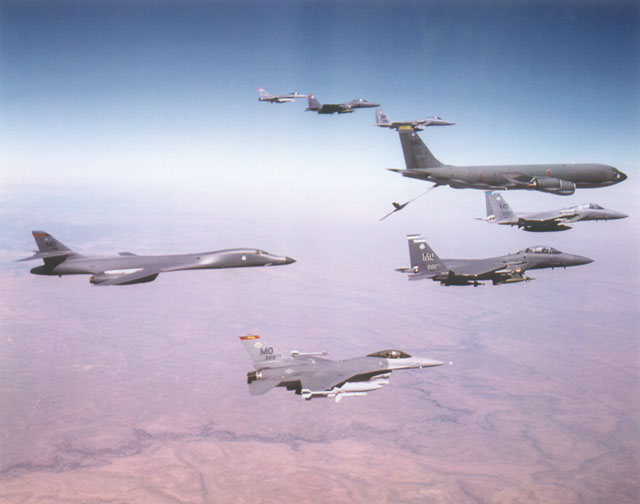
In the 1990s, when I was a part of the phenomenal 366th Wing Gunfighters team pictured above – the U.S. Air Force’s premier “air intervention” composite wing and, by itself, what I consider to have been “the second greatest Air Force the world has ever seen,” second only to the entire U.S. Air Force – I had not even heard of coaching as I practice it professionally now, and I would have never guessed what “coaching culture” might mean.
In fact, it was probably about two years after I started my leadership coaching practice in 2018 before I ever heard the term coaching culture. But, looking back, even though no one formally practiced coaching in the 366th as I do now, I see how we had many of the elements of a coaching culture in our organization.
Coaching and Coaching Culture Defined
The International Coaching Federation (ICF) says the style of coaching I practice is about “partnering with clients in a thought-provoking and creative process that inspires them to maximize their personal and professional potential.” This involves respectful dialogue in which the client and the coach are both willing and able to speak their minds, and willing and able to listen carefully to one another.
I define “coaching culture” as a space where a significant number of the individuals in an organization “practice coaching behaviors as a means of relating to, supporting, and influencing one another.” [See Hart, W. (2005). Getting culture: Imbuing your organization with coaching behavior. Leadership in Action, 25(4), 7-10.]
Coaching Culture in the 366th
When I was in the 366th, we certainly didn’t think of ourselves as “partnering with one another in a thought-provoking and creative process to inspire all of us to maximize our personal and professional potential.” We were, after all, in the business of putting our own lives on the line to break things and kill people, when duty required us to take the fight to our nation’s enemies. But we definitely practiced the kind of dialogue I described above.
Granted, dialogue was not always appropriate. For example, when I was a young wingman flying the F-15E Strike Eagle and hanging on for dear life to my much more experienced flight leads, I knew that I was expected to say only three basic things on the radio: 1) “Two” (as a simple response to a check-in by lead); 2) “Bingo” (as in, “I’m the first one out of gas, and I’m embarrassed and I apologize”); and 3) “Lead, you’re on fire” (but only after I’d given lead sufficient time to notice the fire without my help).
My job was to stay in the briefed position, and to accomplish my portion of the mission with minimal chatter and no drama. But I could do that only if I was willing and able to listen carefully to others, and, when it was appropriate, even the more experienced members of our team were mostly willing and definitely able to listen carefully to me.
My teammates in the 366th and I also practiced other behaviors which characterize the relationships between coaches and their clients, including a focus on helping relationships; an emphasis on co-creative processes; a commitment to exploring new ways of thinking and behaving; and an emphasis on cultivating trust and safety. Our mission was too important – and too dangerous – for us to operate in any other way, even if there was a clear military hierarchy where ultimate authority resided at the top of the pyramid, and subordinate authority proceeded down from the top and throughout the organization via very distinct levels, with lots of protocol.
We definitely weren’t very touchy-feely. And I butted skulls with my colleagues on more than one occasion. But, when it came to doing our jobs and even to being there for one another in difficult personal times, we had each other’s backs, to the point that we were willing to die with one another and for one another.
Wingman Life
It pains me to say that I’m not flying fighter jets anymore, even if my back and neck are happy about it – but I’m glad to say that I won’t ask my coaching clients to die for me, just as I don’t expect to have to die for them. I nevertheless bring my fighter pilot experience to my work as a leadership coach, just as I bring a wingman philosophy to every area of my life, a philosophy which keeps me committed to respectful dialogue and to mutual support with everyone in my formation.
I call this Wingman Life.
As I operate as a wingman in my daily life today, I “fly” alongside my family, friends, and colleagues, and they can count on me to respect them and to stay in position.
As I operate as a wingman coach, I “fly” alongside executives and other leaders who are committed to improving their performance as “flight leads” in their organizations and communities, and my clients can count on me to respect them and to stay in position with them.
That means that, if you and I become partners in a coaching relationship, you will be the flight lead and I will be your wingman “flying” alongside you, wherever you want to go, while I keep the chatter and the drama to an absolute minimum. And I will do everything in my power to stay in position alongside you as your coach on your journey of self-discovery and self-empowerment – just as I do everything in my power to stay in position alongside my family, friends, and colleagues, and just as I did everything in my power to stay in position alongside my flight leads in the F-15E Strike Eagle and the rest of my teammates in the 366th.
Studying Coaching Culture
Because I am committed to my own continuous learning and growth in service to others (and also because I am a bit of a glutton for punishment), I have completed a Doctor of Education (EdD) degree from The George Washington University Graduate School of Education and Human Development to enrich my work as a leadership coach. (I finished the EdD many years after I first made plans to complete a doctorate, but that’s a story for another day.)
My EdD dissertation is titled, “Exploring the Nexus between One-on-One Coaching and Coaching Culture: Examining How Employee Experiences of Coaching in the Workplace May Lead to Cultural Change.” My dissertation explores whether or not coaching culture and Wingman Life have resulted from a coaching program established by a United States federal government agency in 2019. Since then, one-on-one coaching and other forms of coaching have been made widely available to agency employees, and I wondered about the results beyond the personal and professional benefits to individuals who had received coaching.
As a part of my case study, I interviewed agency coaching program managers, coaches, and coaching clients to examine how they described the extent to which one-on-one coaching has changed their behaviors and their perceptions regarding working with their teammates at the organization. It was fascinating to see their enriched sense of connection to one another after their shared experience of coaching – and it was inspiring to see how they fight “to stay in position on one another’s wings,” despite their obvious lack of G-suits, helmets, and oxygen masks, and without even realizing that they are living the Wingman Life I’ve been describing.
Wingman Life is Coaching Culture is the Best Kind of Life
When we live a life of respectful dialogue and mutual support with our family, friends, and colleagues, we are practicing Wingman Life and coaching culture, whether we call it that or not – and I don’t think there is any better kind of life.
Got Wingman Life? It takes a serious commitment, but it’s great work, if you can get it – and I’m convinced it will improve the effectiveness of any group or organization, along with the quality of life of all its members, inside and outside the cockpit.
No fighter jets required.
Look for my dissertation on the internet near you and check in with me when you have a chance, to share your thoughts about coaching culture and Wingman Life. I’d love to hear what you think. You can reach me at eric@wingmanexecutivecoaching.com.
Coaching Culture Newsflash
Finally, in case you haven’t heard, let me finish by happily reporting that all three of our U.S. military services and many of our federal government agencies are now formally employing coaching and working toward coaching culture across their organizations.
I wish I’d gotten that kind of help myself years ago!


 Wingman Executive Coaching