
“There We Were…”
“There I was…” is fighter pilot talk to warn you that a story’s coming – one that probably involves a fair amount of wristwatch shooting, in addition to what my mother would have called “braggadocio,” even though she didn’t have a drop of Italian blood in her body.
In this case, I want to tell this story to brag about the teammates I had one day a while back – my wingmen, who helped me with much more than singing “You’ve Lost that Loving Feeling” in the Top Gun bar.
So there we were…
Leadership Lessons Learned
- Any mission is the right mission for superior leadership
- Leadership isn’t about the boss or the circumstances or the equipment – it’s about the team
- Challenges, especially tricky and dangerous ones, are the quintessential opportunities to prove ourselves
- Proving ourselves individually is important; but proving ourselves together is what makes us most human
- “There we were…” is almost always a better, much more profound story than “There I was…”
#WingmanLife Principles
- #WingmanLife isn’t only for fighter pilots
- We fly in formation, in fighter jets and in life, to do hard things
- Flight leads are in charge, but that starts with being responsible for caring for those they lead
- Good wingmen hate to fall out of position more than anything
- Good wingmen don’t clutter up the radios, but their timely inputs are essential
- Mission accomplishment happens when we fight as a team, strike our targets, and come back home together
Wingmen in a Galaxy Far, Far Away
This story happened so long ago that the son of the one of the guys with whom I joined the Air Force in 1987 is now already done flying the same jets I used to fly – and everyone actually in the story has been out of the Air Force for several years. But it feels like it all happened just yesterday, as all stories with good wingmen do, right?
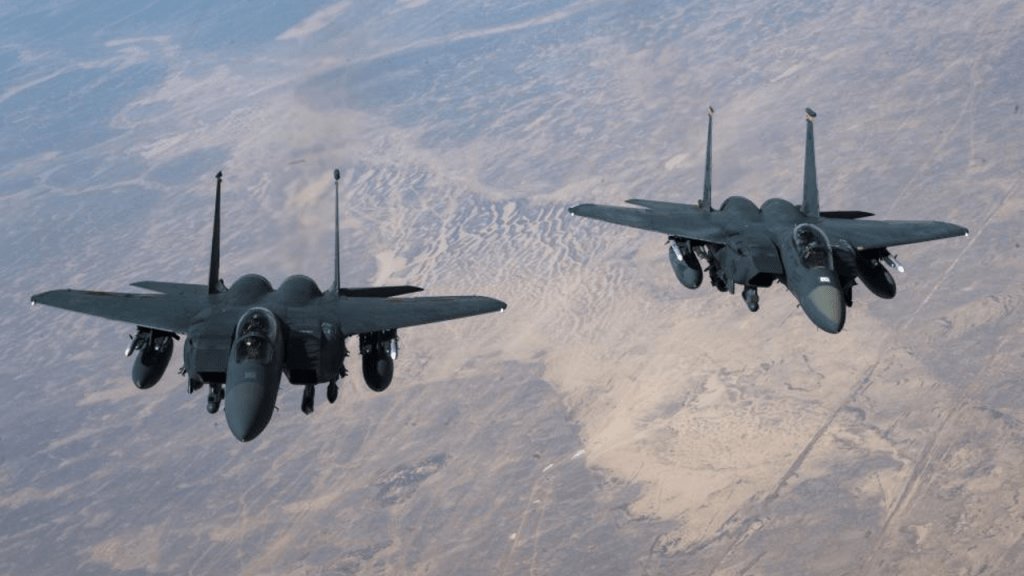
Here’s some of the backstory: In the United States Air Force, a “flight” is two or more aircraft intentionally operating in close proximity to one another, under the leadership of a “flight lead.” That close proximity starts for the aviators involved while they are planning and briefing the mission, and it only finishes after they spend sometimes more time debriefing the mission than they did actually flying it.
In a flight of two, the pilot or crew in the second jet is the “wingman,” who is there to support the flight lead, in the first jet, through every phase of the mission.
In our case, that mission was a sortie from our deployed base in Turkey, into the airspace over northern Iraq, during Operation Northern Watch (ONW). ONW was a Combined Task Force charged with enforcing a no-fly zone north of the 36th parallel in Iraq. The United States and other Gulf War Coalition nations conducted ONW to protect Kurds within Iraq and to provide them with humanitarian aid.
The Hatch Just Blew!
That day, I was leading a flight of two F-15E Strike Eagles on an ONW sortie that was completely unremarkable, right up until my jet’s utility hydraulic system sprung a catastrophic leak while we were still over Iraq.
Fortunately, I had the assistance of my Weapon Systems Officer, Charlie “Gump” Finley, in my backseat, and our wingman crew, Pat “Cheater” Cheatham and Steve “Dietz” Dietzius, who were flying as our #2. Despite the impression you might get from their callsigns, I couldn’t have had better help. Considering that my callsign is “Rabbit” (another story for another day), you’re safe and welcome to assume that I can use good help.
Back in the day, before the Gucci active electronically scanned arrays enjoyed by my fighter pilot successors, the F-15’s radar didn’t work without utility hydraulics, so we could no longer continue our mission. The utility hydraulic system was also necessary for normal operation of the landing gear and wheel brakes, which meant that landing was going to be an unusual experience.
To take advantage of any residual utility hydraulic pressure we still had, our checklist directed us to drop the gear as soon as practical, and to land as soon as conditions would permit. Those checklist steps were complicated, first, by the fact that we were still over enemy territory, and having our wheels down would limit our ability to maneuver; and, second, by the math that meant that, once we dropped the gear, we would have to divert to a Turkish air base sight unseen. The gas we had left meant that our home base with US forces was too far away.
We’re Going to Diyarbakir
I turned the jet toward Diyarbakir, while Gump coordinated completion of all the applicable emergency procedures – and while Cheater and Dietz hung on, and backed us up on our decision making, our navigation, and our communications with all the command and control folks who’d want to know exactly what was happening.
I pushed up the throttles to race to the Turkish border, and then we slowed down again and I dropped the gear. Ironically, once we did that and no longer had the gas to get home to Incirlik, we had to dump gas overboard, to make our jet light enough to land and stop in the approach end cable at Diyarbakir.
“Any of You Boys Seen an Aircraft Carrier Around Here?”
Navy fighter pilots catch cables every time they land on aircraft carriers. Air Force fighter pilots catch cables only when something has gone wrong; and this would be my first “approach end arrestment.” We’d be recovering into the cable with unexpended live weapons on board, which would make things even more interesting.
The type of cable at Diyarbakir and the weight of our jet meant we had very little margin for error. For those aviators among you, it was a question of maximum acceptable cable engagement speed vice minimum acceptable approach speed.
We did a loose formation low approach, so we could all take a look at the cable and the rest of the runway environment; and then I had Cheater land first, since my landing would close the runway, while Gump and I got extracted from the cable.
As Cheater rolled out from his landing, he said everything looked like it should. Good words to hear from a man I happily trusted with my life.
Author’s Note
I know I’ve just used lots of jargon, but I have to confess that the jargon pumps me up, even though I know many people who started reading this blog may have quit by now, out of jargon frustration. As I continue telling this story to whoever’s still reading, what pumps me up even more than the jargon is remembering the incredible support I got from Cheater and Dietz – and especially from Gump.
Because things did not turn out the way Gump and I had planned.
This is Where Things Really Go Awry
I landed, without greasing it on, hitting the ground hard just like Navy fighter pilots do every time they land, and we engaged the cable near centerline, just below the maximum allowable speed; but, as I began to control our rollback with engine power, one side of the cable came free from the cable housing, and the uneven recoil began to spin our F-15 like a top. Gump and I of course didn’t know exactly what had happened behind us. All we knew was that our jet was spinning backwards on the runway, with very little distance between us and the dirt, and not a whole lot I could do to control the aircraft. If you’ve been to Disney Land, think of Mr. Toad’s Wild Ride.
From memory, Gump calmly talked me through another emergency procedure for a situation like that, which included shutting down the engines, just in case I wasn’t as good as I’d always thought; but even though there was probably a moment when Gump would have been well within his rights to pull the ejection handles, to get us both out of the aircraft before the wheels collapsed or worse, I was able to stop the jet while we were still just barely on the concrete.
Charlie got his callsign because there may be some things about him that remind you of Forrest; but I still remember the calm professionalism in his voice, while the shit seemed close to hitting the proverbial fan.
Better Together
Many fighter pilots fly solo, and they generally manage just fine without backseaters, but never without wingmen. On that day in Iraq and Turkey, Cheater and Dietz were my wingmen in the other jet, and Gump was my wingman three feet behind me.
I am competent and confident enough to say that I am generally, even almost always, pretty damn good alone – but I am also smart enough to know that I am even better when I have help from wingmen like Gump, Cheater, and Dietz.
Wingmen make me better.
How about you?



 Wingman Executive Coaching